Business Issue:
A manufacturer of do-it-yourself and professional products was experiencing declining share, margins and price. Products were positioned using a “good, better, best” price strategy. Distributors were promoting the products on price and seeking continual price reductions from the manufacturer. End customers didn’t understand the product differences so buying the lowest price product was the best value.
Problem Causes:
Expectation—Fuzzy expectations caused by price driven positioning.
The product and brand structure was confusing. The differences between products were not easy to understand and the reasons to buy the right product for the application was lost on the customer.
Experience—Product performance from product to product was erratic because customers didn’t understand which products to use.
Inexpensive, low performance products would disappoint when they underperformed. High performance products seemed expensive when used in less demanding situations.
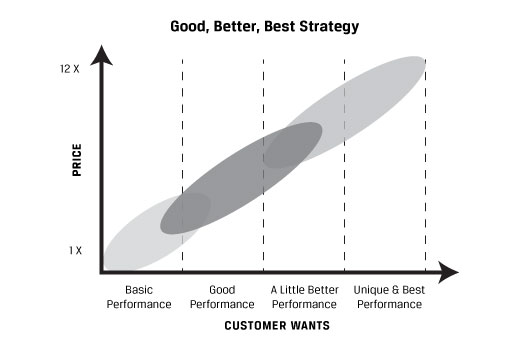
Figure 1: Overlapping value propositions, fuzzy brand positioning, price focus and confusion
Actions:
The first step was understanding what the customers did with the products and what they wanted the products to do.
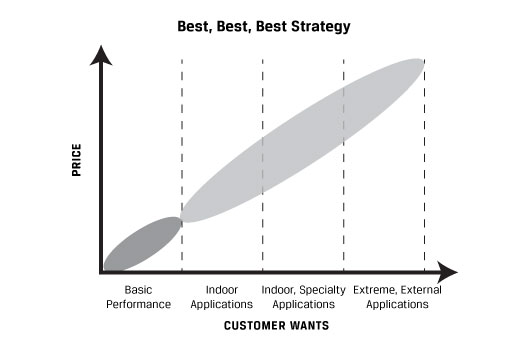
The brand promises of the three brands in the category were overlapping, not clearly differentiated. Only two brand promises were necessary to cover the customer needs. Eliminating one brand simplified the product range. The two remaining brands were clearly positioned differently from each other. Any products that may have been sold under two brands were eliminated and placed under just one of the two brands.